
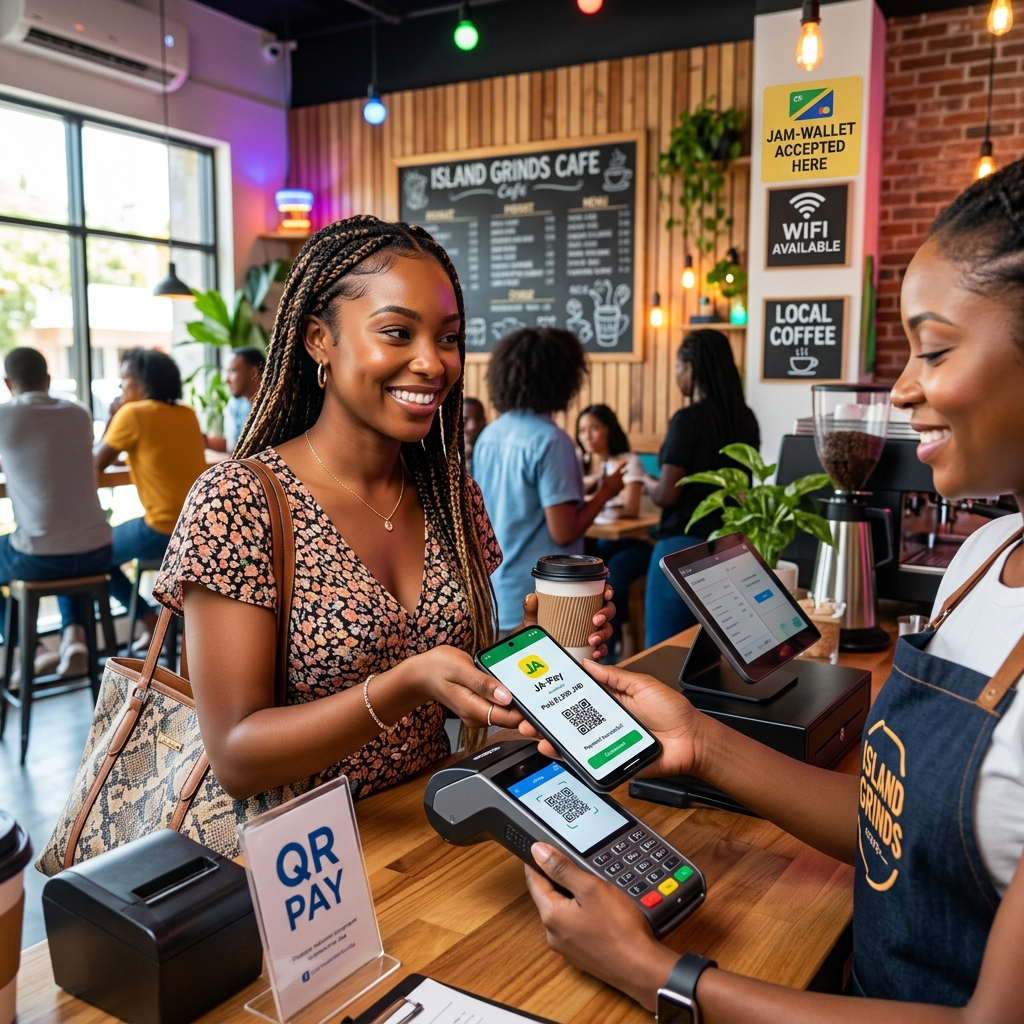
A massive, rapid, and highly disruptive financial revolution is currently sweeping across Jamaica, fundamentally altering the way everyday citizens, small business owners, and large corporations conduct their daily transactions. At the absolute forefront of this transformation is the explosive, widespread adoption of mobile digital wallets and innovative Fintech (Financial Technology) solutions, which are aggressively pushing the traditionally cash-reliant island towards a highly efficient, cashless future.
The Push for Financial Inclusion
Historically, a significant percentage of the Jamaican population—particularly in deep rural areas and inner-city communities—has been considered "unbanked" or "underbanked," relying entirely on physical cash for all transactions due to the stringent requirements and high fees associated with traditional commercial banking. The new wave of local digital wallets has completely shattered these barriers.
By requiring nothing more than a basic smartphone and a valid government ID to open an account in minutes, these platforms have provided massive, unprecedented financial inclusion. Users can now instantly send money to relatives across the island, pay utility bills from their living rooms, and even receive international remittances directly to their phones without ever having to stand in the notoriously long, frustrating lines at physical banks or remittance agencies.
"Digital wallets are not just a convenience; they are a massive tool for economic empowerment," explained a leading Kingston-based Fintech CEO at a recent technology summit. "We are giving the pan-chicken vendor on the corner and the taxi driver the exact same frictionless ability to accept digital payments as a massive supermarket chain. It levels the economic playing field."
Small Businesses Leading the Charge
The adoption rate among micro, small, and medium-sized enterprises (MSMEs) has been nothing short of staggering. In massive local markets like Coronation Market in Kingston, it is becoming increasingly common to see vendors displaying QR codes next to their fresh produce. This shift eliminates the constant struggle for exact change, heavily reduces the security risks associated with carrying large amounts of physical cash, and allows small vendors to build a digital transaction history, which can later be used to secure micro-loans.
Furthermore, the government’s own massive push towards digitalization, spearheaded by the Bank of Jamaica's recent launch of the JAM-DEX (the national Central Bank Digital Currency), has provided significant legitimacy and regulatory frameworks to the rapidly expanding Fintech sector. The government has aggressively incentivized the adoption of digital payments by offering massive cash rewards to early adopters and small businesses who integrate the technology.
Challenges and the Road Ahead
Despite the massive, undeniable progress, significant challenges remain. The primary obstacle is the need for reliable, high-speed mobile internet penetration in deep rural areas to facilitate seamless transactions. Additionally, Fintech companies are aggressively investing in massive public education campaigns to build trust among older generations who remain deeply skeptical of digital money and highly fearful of cybersecurity threats.
However, the trajectory is undeniably clear. As the younger, highly tech-savvy generation continues to enter the workforce and demand frictionless, instant services, the reliance on physical cash will continue to plummet. Jamaica’s Fintech revolution is not just modernizing the financial sector; it is massively accelerating the island's integration into the global digital economy, proving that Caribbean nations can be primary innovators in financial technology.