
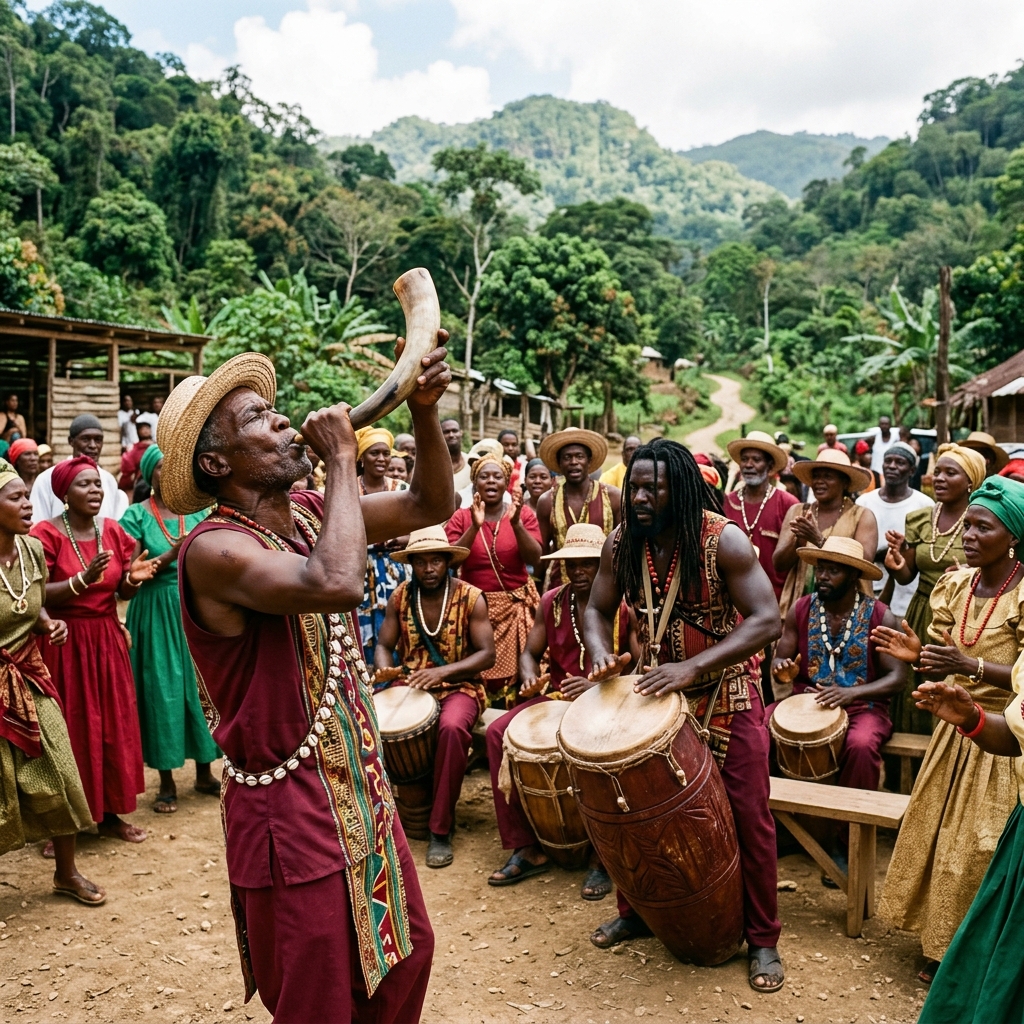
Deep within the dense, mist-shrouded, and historically impenetrable peaks of the Blue and John Crow Mountains, and hidden within the rugged, treacherous terrain of the Cockpit Country, lie the fiercely independent, deeply historical communities of the Jamaican Maroons. Their story is undeniably one of the most incredible, awe-inspiring tales of resistance, strategic brilliance, and cultural preservation in the entire history of the Western Hemisphere.
A History of Defiance
The Maroons are the direct descendants of formerly enslaved West Africans who, rather than submit to the brutal horrors of the transatlantic slave trade, successfully escaped from Spanish and later British plantations starting in the 17th century. Fleeing into the highly unforgiving, mountainous interior of the island, they established highly organized, fiercely militarized, and deeply secretive free communities.
Utilizing brilliant, highly sophisticated guerrilla warfare tactics, deep knowledge of the local flora and fauna, and the strategic use of the abeng—a cow horn used to communicate complex messages over massive distances—the Maroons successfully fought the mighty British Empire to a standstill. Their relentless, highly effective resistance eventually forced the British to sign formal peace treaties in 1738 and 1739, granting the Maroons their freedom and total autonomy over their lands, nearly a full century before the official abolition of slavery in the British Empire.
"We are the original freedom fighters of this region; we never surrendered," stated a respected Maroon elder during a recent cultural festival in Accompong, the largest remaining Maroon settlement. "The blood of the great warrior Queen Nanny flows through our veins. Our history is not just Jamaican history; it is a vital chapter in the global fight for human liberation."
Preserving a Unique Culture
Today, the major Maroon communities—Accompong in St. Elizabeth, Moore Town in Portland, and Charles Town in St. Mary—continue to operate with a significant degree of semi-autonomy, governed by their own elected Colonels and traditional councils. However, their most massive ongoing battle is not physical, but cultural: the intense, urgent fight to preserve their unique, centuries-old traditions in an increasingly modernized world.
Maroon culture is a deeply complex, highly spiritual syncretism of various West African traditions (primarily Akan from modern-day Ghana) and indigenous Taíno practices. The Kromanti language, an ancestral tongue used primarily in sacred, highly secretive religious ceremonies and powerful, rhythmic drumming rituals, is dangerously close to extinction, known only to a handful of elders.
To combat this, Maroon communities are aggressively implementing massive cultural retention programs. Local schools are increasingly integrating Maroon history and basic Kromanti phrases into their curriculum. Furthermore, annual cultural festivals—particularly the massive January 6th celebration in Accompong—are increasingly opening their doors to international researchers and cultural tourists, seeking to monetize their heritage while simultaneously documenting and preserving it.
The Threat of Modern Development
Despite their highly recognized historical importance, the Maroons face massive, ongoing existential threats from modern industrial development. Controversial, highly publicized proposals for bauxite mining in the ecologically sensitive Cockpit Country have sparked intense, fierce pushback from Maroon leaders and environmentalists alike, who argue that such activities would absolutely destroy their ancestral lands and pollute their sacred rivers.
As the Jamaican Maroons fiercely navigate the complex challenges of the 21st century, their enduring legacy serves as a powerful, undeniable reminder of the incredible strength of the human spirit. Their ongoing fight ensures that the sacred, echoing sound of the abeng will continue to resonate through the Jamaican mountains for generations to come.