
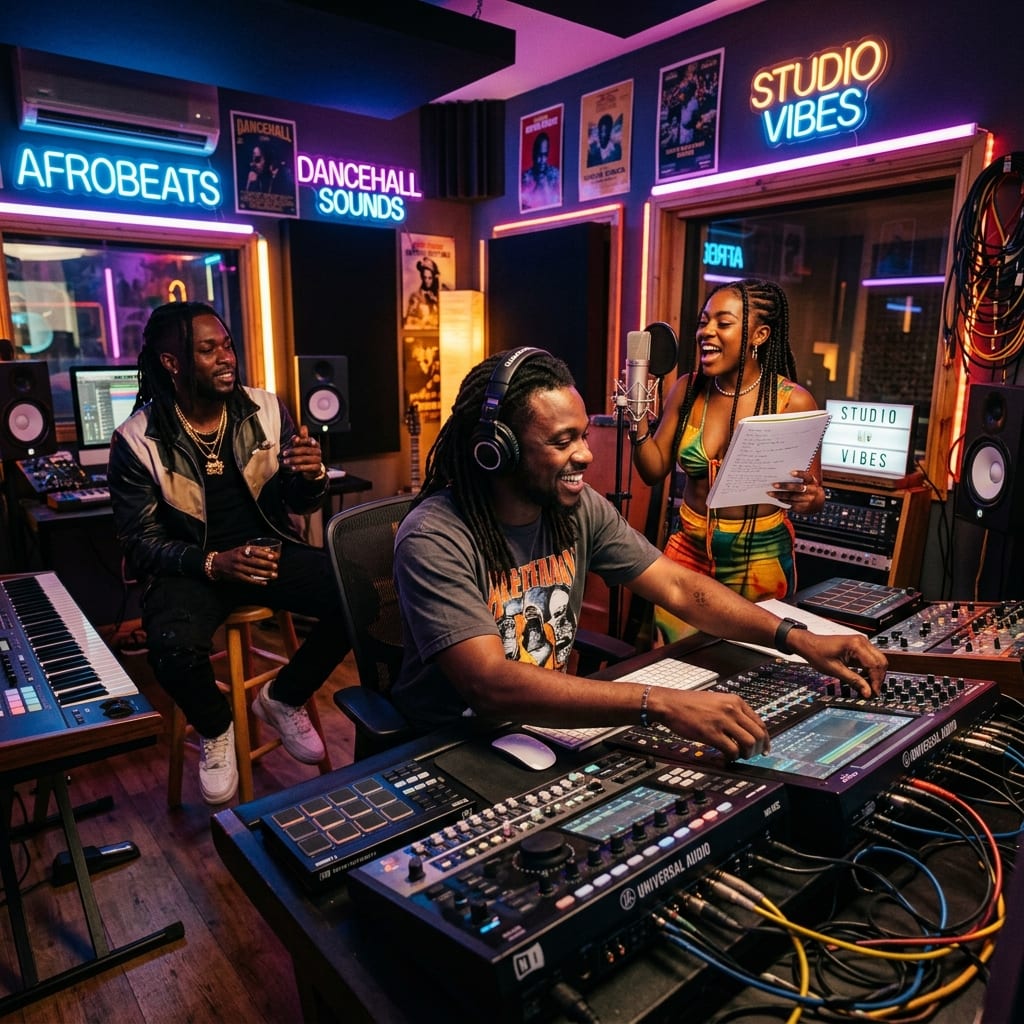
The global music scene is experiencing a huge shift in 2026. What started as a subtle blend between West Africa and the Caribbean has exploded into a major cultural movement. The lines dividing Afrobeats and Dancehall are quickly disappearing, resulting in a shared sound that is dominating charts, clubs, and conversations in the United States and beyond. This is no longer about isolated collaborations; it represents a true merging of two of the world's most influential genres.
The Roots of the Convergence
To grasp the current surge, we need to explore the deep historical and cultural connections between West Africa and Jamaica. The rhythms from Africa traveled across the Atlantic, laying the groundwork for Jamaican music. For many years, reggae and dancehall artists have paid tribute to their African origins. Similarly, African musicians have consistently cited legends like Bob Marley, Shabba Ranks, and Vybz Kartel as key influences. However, the industries had operated separately for a long time. Afrobeats was establishing itself across the continent and in the UK, while Dancehall remained powerful in the Caribbean and the Americas.
The shift began to pick up speed in the late 2010s and early 2020s as digital streaming opened up global access. African artists started incorporating dancehall rhythms, while Jamaican producers began blending their beats with the unique shakers and log drums of West African music. Now, in 2026, this exploration has evolved into a successful hybrid genre. The recording process itself has become more decentralized. It is now common for a track to feature vocals recorded in Lagos, a beat created in Kingston, mixing done in London, and the final master delivered from Atlanta.
Rema's Bold Pivot and the "Dark Dancehall" Movement
One of the most notable examples of this trend is Afrobeats star Rema's latest move. After a series of huge pop hits, Rema surprised everyone by releasing his highly anticipated single, "TEA." Instead of sticking with his sunny Afropop style, "TEA" takes a sharp turn into dark, moody dancehall. Produced by an international team that includes Mustard and London, the track features a gritty, bass-heavy rhythm that feels at home at a late-90s Kingston street dance.
Rema’s delivery on the track completely abandons his usual smooth singing for a fast-paced, patois-influenced deejay style. The result is an impressive piece of music that has quickly taken over social media. Viral dance trends on TikTok and Instagram have pushed the track to the top of the charts, showing that the global audience craves this raw, authentic blend. Rema's shift is significant because it indicates to the industry that embracing the raw edge of dancehall is not a risk, but a big opportunity.
Fireboy DML and Masicka: The Ultimate Crossover
While Rema explores this sound on his own, other artists are forming strong partnerships. The recent collaboration between Nigerian artist Fireboy DML and Jamaican dancehall star Masicka on the track "Claat!" perfectly captures the synergy of 2026. At first glance, Fireboy’s smooth Afrobeats style seems to clash with Masicka’s sharp dancehall lyrics. However, the execution showcases a masterful blend of contrast and balance.
"Claat!" works because both artists stay true to their identities. Fireboy delivers a catchy, infectious hook over a beat that combines the driving snare of dancehall with the rhythmic shakers of Afrobeats. Masicka anchors the track with a fierce verse that adds the needed grit and street credibility. The song has become an anthem this summer, playing from cars in Miami, clubs in New York, and sound systems throughout the diaspora. It proves that the best fusions happen when artists embrace their strengths instead of trying to imitate one another.
The Chart Dominance and the "Amapiano-Hall" Wave
The charts in August 2026 reflect this unified sound. Major streaming playlists in the US are currently filled with artists who combine these influences effortlessly. Ayra Starr, for example, continues her success with tracks like "Where Do We Go" and "Tornado," both showcasing Caribbean rhythms beneath her Afrobeats melodies.
In addition, a new micro-genre is emerging, which some insiders are calling "Amapiano-Hall." This genre mixes the deep, booming log drums and jazzy piano chords of South African Amapiano with the energetic vocal delivery and quick hi-hats of modern dancehall. Artists like Asake and CKay lead this specific blend, creating tracks that are both hypnotic and high-energy. This ongoing innovation keeps the unified genre fresh and ensures its continued presence on global dance floors.
Beyond the Music: The Cultural Impact in the US
This musical migration is not just happening in studios; it is fundamentally changing the cultural scene in the United States. In cities with large diaspora populations—such as New York, Miami, Atlanta, and Houston—the club environment has transformed. There is no longer a choice between an "Afrobeats night" or a "Reggae/Dancehall night." The most successful promoters are those who understand how to merge the two seamlessly.
DJs must now be well-versed in both genres, knowing how to transition from a Burna Boy hit to a Skillibeng track without losing the room's energy. This creates a shared cultural space where young people of Caribbean and African descent enjoy parties together, recognizing their common musical roots. It’s a powerful form of cultural connection happening on the dancefloor.
The Future of the Fusion
As we look toward the end of 2026 and beyond, the blending of Afrobeats and Dancehall shows no signs of slowing down. Major labels in the US are actively looking for artists who can bridge both worlds, understanding that this is the new norm for global pop music. We can expect more joint EPs, co-headlining tours, and festival lineups that reflect this reality.
In the end, this convergence beautifully demonstrates a long-standing cultural bond. It represents the sound of the diaspora coming together, communicating, and celebrating through rhythm. Whether it's the dark dancehall vibe of Rema’s "TEA" or the perfect collaboration of Fireboy and Masicka’s "Claat!", the message is clear: the future of global music is a shared experience, rooted in Africa, shaped in the Caribbean, and spread around the world.